

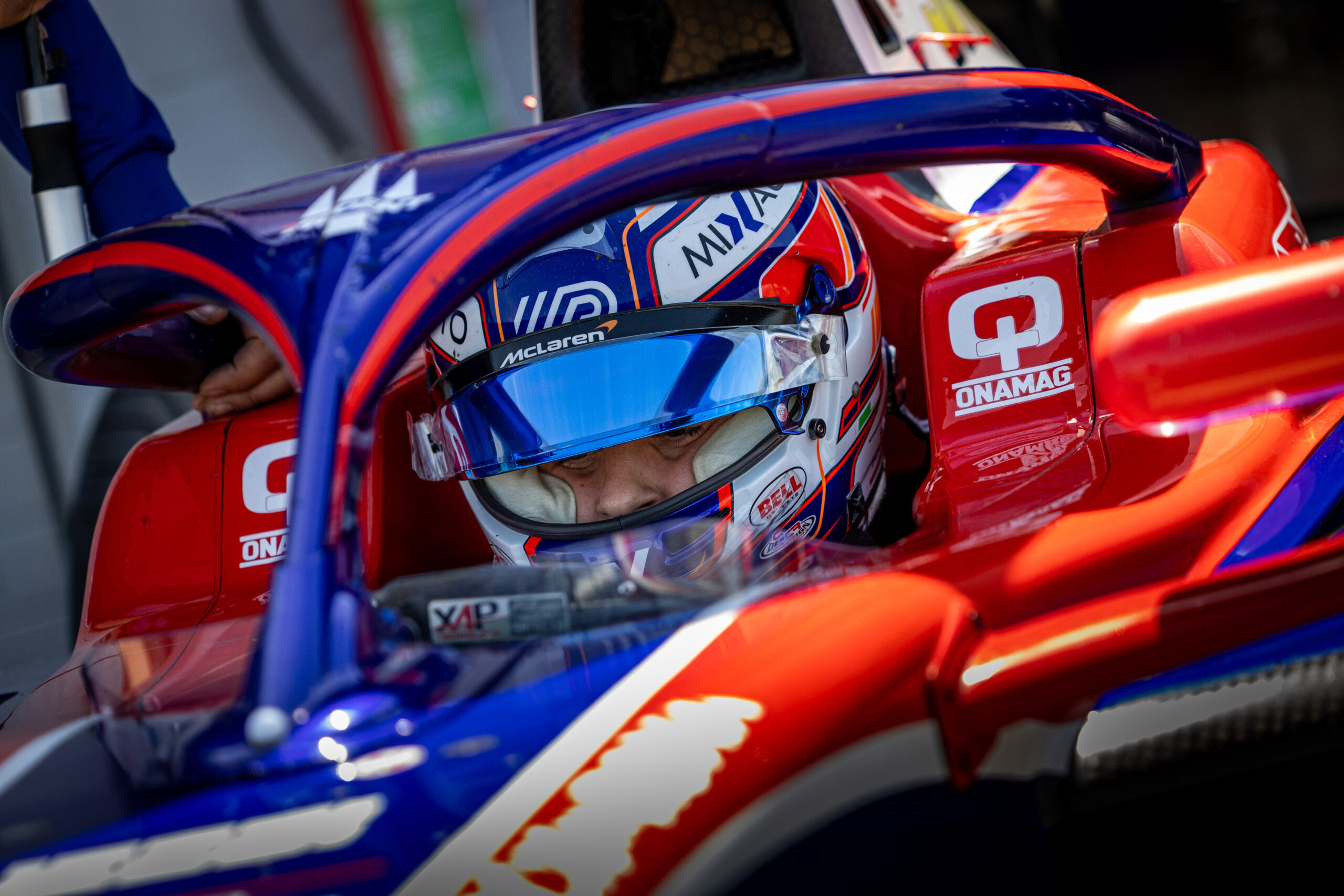
Vittorie, podi, squalifiche, rimonte e ritiri. La prima metà del 2026 ha regalato a Pro Racing Motorsport un quadro ricco e variegato: dall’esordio vincente di Del Pino in Australia al capolavoro di Roda e Verschoor alla 24h di Le Mans, dalla vittoria di Al Rifai sotto la pioggia di Misano al doppio podio di Ciconte in Giappone. Questo documento raccoglie il bilancio di ogni pilota e le prospettive per la seconda parte di stagione.
Bruno Del Pino ha impressionato tutti in Formula 3. Vince la Sprint Race di Melbourne all’esordio assoluto in categoria, costruisce una classifica mondiale di tutto rispetto (3°, dietro Slater e Ugochukwu), e a Silverstone sfiora il podio in Feature Race prima che il degrado gomme lo faccia scivolare nelle ultime tornate. A Spielberg zero pesante, a Budapest altra gara lontano dai punti di vertice. Il potenziale per lottare è chiaro — la consistenza deve crescere. Monza, Spa, Budapest, Hockenheim. Con 49 punti e Slater a 130, il titolo è fuori portata ma il terzo posto assoluto è un obiettivo realistico. Almeno una vittoria di tappa è l’obiettivo minimo per chiudere una stagione di crescita con il sigillo giusto.
La storia più cinematografica della stagione è quella di Matteo De Palo. Il vice campione FREC 2025 affronta il salto in F3 con un avvio segnato da problemi tecnici (guasto elettrico in qualifica a Barcellona) e difficoltà di adattamento. Poi Silverstone: partenza quinta, sorpassa Nael e Slater nel giro di quattro tornate, vince la Feature Race con gestione impeccabile. Squalificato per il diffusore 3mm fuori misura — un colpo durissimo che cancella una delle prove più mature della stagione. Budapest non va meglio. Il ritmo dimostrato a Silverstone è reale. Serve continuità sin dalla qualifica: quando parte davanti, De Palo sa fare la differenza. Monza, pista ideale per le sue caratteristiche, potrebbe essere il round della svolta definitiva.
Il paradosso della stagione. Matej Gladysz è quello che rimonta di più — sesto a Barcellona dopo penalità, decimo in Feature Race — ma è anche quello che raccoglie meno per colpa di circostanze esterne: a Spielberg colpito da Nakamura nella Sprint e da Xie nella Feature; a Budapest stesso copione in entrambe le gare. La sua prima vittoria in F3 porta la data di Silverstone ma nasce dalla squalifica di De Palo. Un pilota che merita più di quanto il foglio risultati racconti.
Un’altalena per Reno Francot che racconta bene la complessità di questa stagione. L’avvio al Red Bull Ring è da favola: vittoria in Gara 3, podio in Gara 2 e sesto in Gara 1 — leader del mondiale. A Zandvoort tiene il terzo posto sotto pressione di Al Dhaheri. Poi la stagione cambia: Wheldon prima, poi Al Dhaheri, prendono il comando dopo weekend difficili per Francot. A Paul Ricard il colpo più duro: contatto con Gomez, testacoda e ritiro, mentre la classifica si riorganizza intorno ad altri protagonisti. Imola (4-6 settembre) e Hockenheim (11-13 settembre). Solo due round rimasti — ogni punto vale oro. Francot ha già dimostrato il passo per il podio; serve un weekend senza episodi per rientrare in piena lotta per il titolo.
La sorpresa più bella della stagione. David Cosma Cristofor è entrato nel management Pro Racing a maggio, il romeno aveva già guidato la classifica F4 Italia dopo il round inaugurale di Misano. Al Mugello ha confermato il talento con un quarto posto in Gara 1 — persa la leadership allo start ma tenuta la posizione sotto pressione — e un nono nella Finale. Il titolo è ancora matematicamente possibile: solo 55 punti separano Cosma Cristofor da Sammalisto con due round da disputare.
Imola e Monza. Due circuiti che si prestano alle battaglie ravvicinate e dove PREMA ha storicamente brillato. Cosma Cristofor deve ridurre il gap da Sammalisto e sperare in un calo del finlandese. È l’obiettivo più ambizioso di tutto il parco Pro Racing.
La stagione di Mathilda Paatz si può dividere in due: prima e dopo Montreal. Prima — un inizio solido ma senza acuti, quinta in classifica a 35 punti. Poi Canada: prima vittoria in carriera, primo podio, un weekend che ha cambiato tutto. A Silverstone non ha replicato i picchi di Montreal ma ha comunque portato punti. In F4 CEZ a Most: settima in Gara 1 e Gara 3, poi eliminata nella Finale dall’incidente di Danielsson alla prima chicane — nessuna colpa propria.
Ginevra Panzeri, una pilota di due fronti, risultati a doppia velocità. In F4 Francese a Digione aveva dominato il Women’s Trophy in tutte e tre le gare rimanendo nel top 10 assoluto. A Vallelunga in F4 Italia ha vinto la categoria Women nella Gara Finale. Magny-Cours è stata la settimana più nera: tre ritiri su tre, due dei quali per incidenti in cui è coinvolta. Il potenziale è fuori discussione; serve un weekend senza episodi per far emergere la vera Panzeri.
Prima parte di stagione complicata per Luboslav Ruykov, segnata soprattutto dall’incidente con il compagno Chartier a Misano che ha condizionato diversi weekend consecutivi. Ryukov ha mostrato sprazzi di ritmo ma non è ancora riuscito a costruire un weekend completo. L’E4 Championship a Vallelunga è stato un tentativo di trovare ritmo e fiducia su un circuito noto.
La stagione di Alex Chartier è rimasta in parte imprigionata nell’episodio di Misano: il contatto con Ryukov in Gara 1 gli ha tolto due gare e ha pesato sull’arco del campionato per un infortunio alla mano. Quando in pista, ha mostrato il passo per stare nel gruppo di testa — ma la continuità è mancata.
Il più giovane del roster Pro Racing 2026. Olandese, Juste Mulder ha debuttato nelle monoposto quest’anno nella F4 Spagna, affrontando un campionato internazionale competitivo. Per un rookie di 15 anni alla prima stagione a ruote scoperte, l’obiettivo è sempre uno solo: imparare, accumulare esperienza e trovare progressi weekend dopo weekend.
Griffin Peebles, il leader. Impegnato nell’European Le Mans Cup, on Grégoire Saucy e Ben Hanley, Peebles ha costruito il weekend perfetto a Le Castellet vincendo con quasi nove secondi di margine. A Imola la gestione è stata più conservativa ma il secondo posto rafforza ulteriormente la leadership nel campionato LMP2. United Autosports è la squadra da battere.
Il racconto più epico della stagione e anche quello più amaro. La Duqueine di Giorgio Roda e Richard Verschoor. A Paul Ricard: pole, penalità, 30esimi in griglia, rimonta al podio Pro/Am. Alla 24h di Le Mans: testa della corsa per ore, ritirati da un problema ai freni nello stint finale di Richard Verschoor quando la vittoria era alla portata. Un trio che ha dimostrato di avere il materiale per vincere ovunque.
Valerio Rinicella ha portato solidità e maturità in entrambi i suoi impegni stagionali. Alla 24 Ore di Le Mans con Lafargue e Van Uitert il sesto posto finale racconta di una gestione corretta su 24 ore. In ELMS accumula esperienza e punti con IDEC Sport.
Weekend di accumulo esperienza per Matteo Quintarelli nella classe LMP3 con il Team Virage, categoria competitiva dove ogni round affila le competenze endurance. Evoluzione costante nel padroneggiare le specificità della categoria.
Matus Ryba ha scritto la pagina più emozionante del weekend di Le Castellet: primo a venti minuti dalla fine, scivolato terzo negli ultimi giri per qualche sbavatura di troppo nella tappa della Michelin Le Mans Cup. Un podio che brucia ma vale punti importanti. Isaac Barashi ha lavorato per costruire una stagione nella Michelin Le Mans Cup.
Il weekend migliore dell’anno in casa Pro Racing GT. Federico Al Rifai conquista la pole sabato e, con Barbolini e Patrinicola, porta a casa la vittoria nella GT Cup PRO-AM di Prima Divisione nella 3 Ore di Misano disputata sotto la pioggia. Una vittoria costruita su strategia, ritmo e gestione delle variabili meteo. Primo successo stagionale della GT Cup PRO-AM.
Eliseo Donno ha confermato a Le Castellet di essere una presenza solida nel GT3 della Michelin Le Mans Cup: secondo posto di peso in una gara competitiva. In CIGT continua il lavoro di costruzione nella categoria.
Il record più costante di tutto il parco Pro Racing: quattro secondi posti su quattro gare disputate per Joanne Ciconte che ha dimostrato fin dal primo round di essere il principale riferimento per le avversarie di Riona Tomishita, dominatrice del campionato. L’australiana è stata sistematicamente vicina alla giapponese — a volte a distanze ridottissime — senza però riuscire ad effettuare il sorpasso decisivo. Seconda in classifica a 8 punti dalla vetta dopo due round.
Victories, podiums, disqualifications, comebacks, and retirements. The first half of 2026 handed Pro Racing Motorsport a rich and varied picture: from Del Pino’s winning debut in Australia to Roda and Verschoor’s masterpiece at the 24 Hours of Le Mans, from Al Rifai’s victory in the rain at Misano to Ciconte’s double podium in Japan. This document collects the assessment of each driver and the prospects for the second part of the season.
Bruno Del Pino impressed everyone in Formula 3. He won the Sprint Race in Melbourne on his absolute category debut, built a very respectable world championship ranking (3rd, behind Slater and Ugochukwu), and at Silverstone narrowly missed the Feature Race podium before tire degradation made him slide down in the final laps. A heavy zero at Spielberg, and another race far from the top points at Budapest. The potential to fight is clear — consistency needs to improve. Monza, Spa, Budapest, Hockenheim. With 49 points and Slater at 130, the title is out of reach, but overall third place is a realistic goal. At least one stage victory is the minimum target to close a growth season with the right seal.
The most cinematic story of the season belongs to Matteo De Palo. The 2025 FREC runner-up faced the jump to F3 with a start marked by technical issues (an electrical fault in Barcelona qualifying) and adaptation difficulties. Then came Silverstone: starting fifth, he overtook Nael and Slater within four laps and won the Feature Race with flawless management. Disqualified for an oversized 3mm diffuser — a devastating blow that erased one of the most mature drives of the season. Budapest was no better. The pace shown at Silverstone is real. Consistency from qualifying onward is required: when he starts up front, De Palo makes the difference. Monza, an ideal track for his characteristics, could be the definitive turning point.
The paradox of the season: Matej Gladysz is the driver who mounts the most comebacks — sixth in Barcelona after a penalty, tenth in the Feature Race — but is also the one who collects the least due to external circumstances: hit by Nakamura in the Sprint and Xie in the Feature at Spielberg; the same script unfolded in both races at Budapest. His first F3 victory came at Silverstone, but it stemmed from De Palo’s disqualification. A driver who deserves more than the result sheet shows.
A rollercoaster for Reno Francot that clearly tells the complexity of this season. The start at the Red Bull Ring was fairytale-like: victory in Race 3, a podium in Race 2, and sixth in Race 1 — leading the world championship. At Zandvoort, he held onto third under pressure from Al Dhaheri. Then the season shifted: first Wheldon, then Al Dhaheri took the lead following tough weekends for Francot. At Paul Ricard came the hardest blow: contact with Gomez, a spin, and a retirement, while the standings reorganized around other protagonists. Imola (September 4–6) and Hockenheim (September 11–13). Only two rounds remain — every point is gold. Francot has already proven his podium pace; he needs a clean weekend to jump right back into the title fight.
The pleasant surprise of the season, David Cosma Cristofor, entered Pro Racing management in May; the Romanian had already led the Italian F4 standings after the opening round at Misano. At Mugello, he confirmed his talent with a fourth place in Race 1 — losing the lead at the start but holding the position under pressure — and a ninth-place finish in the Final. The title remains mathematically possible: only 55 points separate Cosma Cristofor from Sammalisto with two rounds to go.
Imola and Monza are two circuits suited for close battles, where PREMA has historically shone. Cosma Cristofor must reduce the gap to Sammalisto and hope for a slip-up from the Finn. It is the most ambitious goal across the entire Pro Racing roster.
The season for Mathilda Paatz can be divided into two halves: before and after Montreal. Before — a solid start without highlights, fifth in the standings with 35 points. Then Canada: her first career victory, her first podium, a weekend that changed everything. At Silverstone, she didn’t replicate the highs of Montreal but still brought home points. In F4 CEZ at Most: seventh in Race 1 and Race 3, then eliminated in the Final by Danielsson’s incident at the first chicane — through no fault of her own.
Ginevra Panzeri, a driver operating on two fronts, saw split results. In French F4 at Dijon, she dominated the Women’s Trophy in all three races while staying inside the overall top 10. At Vallelunga in Italian F4, she won the Women’s category in the Final Race. Magny-Cours was her darkest week: three retirements out of three, two due to incidents she was involved in. The potential is beyond question; she needs an incident-free weekend to let the true Panzeri emerge.
A complicated first part of the season for Luboslav Ryukov, largely marked by the incident with teammate Chartier at Misano, which affected several consecutive weekends. Ryukov showed flashes of speed but has not yet managed to construct a complete weekend. The E4 Championship at Vallelunga was an attempt to find rhythm and confidence on a familiar circuit.
The season of Alex Chartier remained partially trapped in the Misano episode: the contact with Ryukov in Race 1 took two races away from him and weighed on his championship campaign due to a hand injury. When on track, he demonstrated the pace to stay in the lead group — but consistency was missing.
The youngest driver of the Pro Racing 2026 roster, Dutch rookie Juste Mulder, made his single-seater debut this year in Spanish F4, taking on a competitive international championship. For a 15-year-old rookie in his first open-wheel season, the target is singular: learn, gain experience, and show progress weekend after weekend.
Griffin Peebles, the leader. Competing in the European Le Mans Cup alongside Grégoire Saucy and Ben Hanley, Peebles built the perfect weekend at Le Castellet, winning with a margin of almost nine seconds. At Imola, execution was more conservative, but second place further strengthened their LMP2 championship lead. United Autosports is the team to beat.
The most epic — and most bitter — tale of the season belongs to the Duqueine of Giorgio Roda and Richard Verschoor. At Paul Ricard: pole position, a penalty, 30th on the grid, and a comeback to the Pro/Am podium. At the 24 Hours of Le Mans: leading the race for hours, only to retire due to a brake issue during Richard Verschoor’s final stint when victory was within reach. A lineup that proved it has the machinery and talent to win anywhere.
Valerio Rinicella brought solidity and maturity to both of his seasonal commitments. At the 24 Hours of Le Mans with Lafargue and Van Uitert, a sixth-place finish reflects proper execution over 24 hours. In the ELMS, he continues to build experience and score points with IDEC Sport.
A weekend focused on gaining experience for Matteo Quintarelli in the LMP3 class with Team Virage, a competitive category where every round sharpens endurance skills. He continues to show steady growth in mastering the specifics of the discipline.
Matus Ryba authored the most emotional moment of the Le Castellet weekend: leading with twenty minutes to go, he slipped to third in the closing laps due to a few minor mistakes in the Michelin Le Mans Cup round. A podium that stings, but yields crucial points. Isaac Barashi worked on building his season in the Michelin Le Mans Cup.
The best weekend of the year for Pro Racing GT: Federico Al Rifai secured pole position on Saturday and, alongside Barbolini and Patrinicola, brought home the First Division GT Cup PRO-AM victory in the 3 Hours of Misano, contested under heavy rain. A win built on strategy, pace, and weather management — marking the first seasonal success in GT Cup PRO-AM.
Eliseo Donno confirmed at Le Castellet that he is a solid presence in GT3 within the Michelin Le Mans Cup, securing a strong second place in a competitive field. In CIGT, he continues building momentum in the category.
The most consistent track record in the Pro Racing camp belongs to Joanne Ciconte: four second-place finishes across four races. From the very first round, she proved to be the main benchmark challenging Riona Tomishita, who dominated the championship. The Australian was consistently close to the Japanese driver — at times by tiny margins — without quite managing the decisive overtake. She sits second in the standings, just 8 points off the top after two rounds.